DEVLOG 04 / Buildcraft
21 Talent Trees, One Character
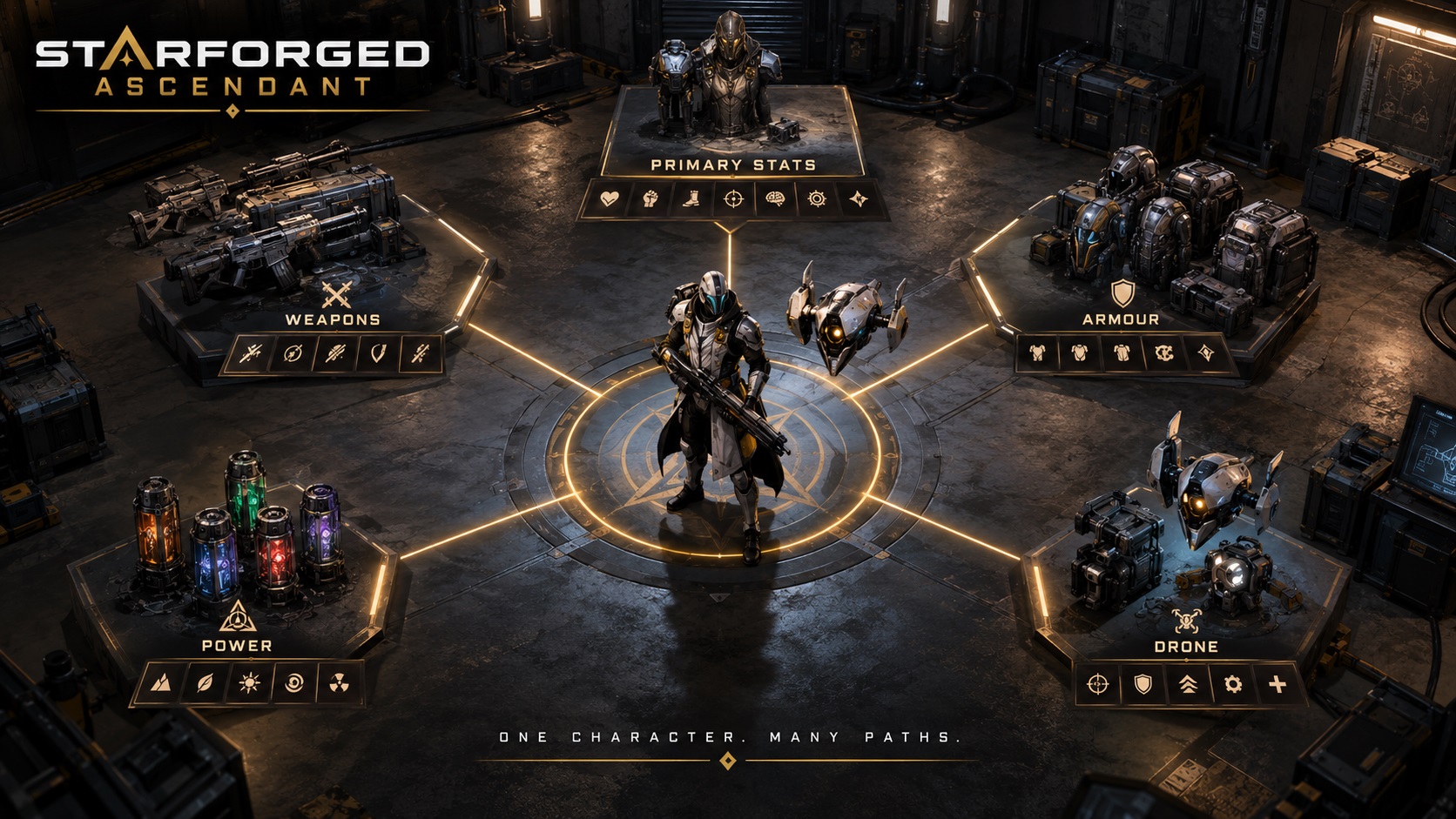
Character builds in Starforged Ascendant are developed through 21 Talent Trees.
Character builds in Starforged Ascendant are developed through 21 Talent Trees.
The trees cover Stats, Weapons, Armour, Power Cores and the Drone, giving you several different ways to specialise the same Character.
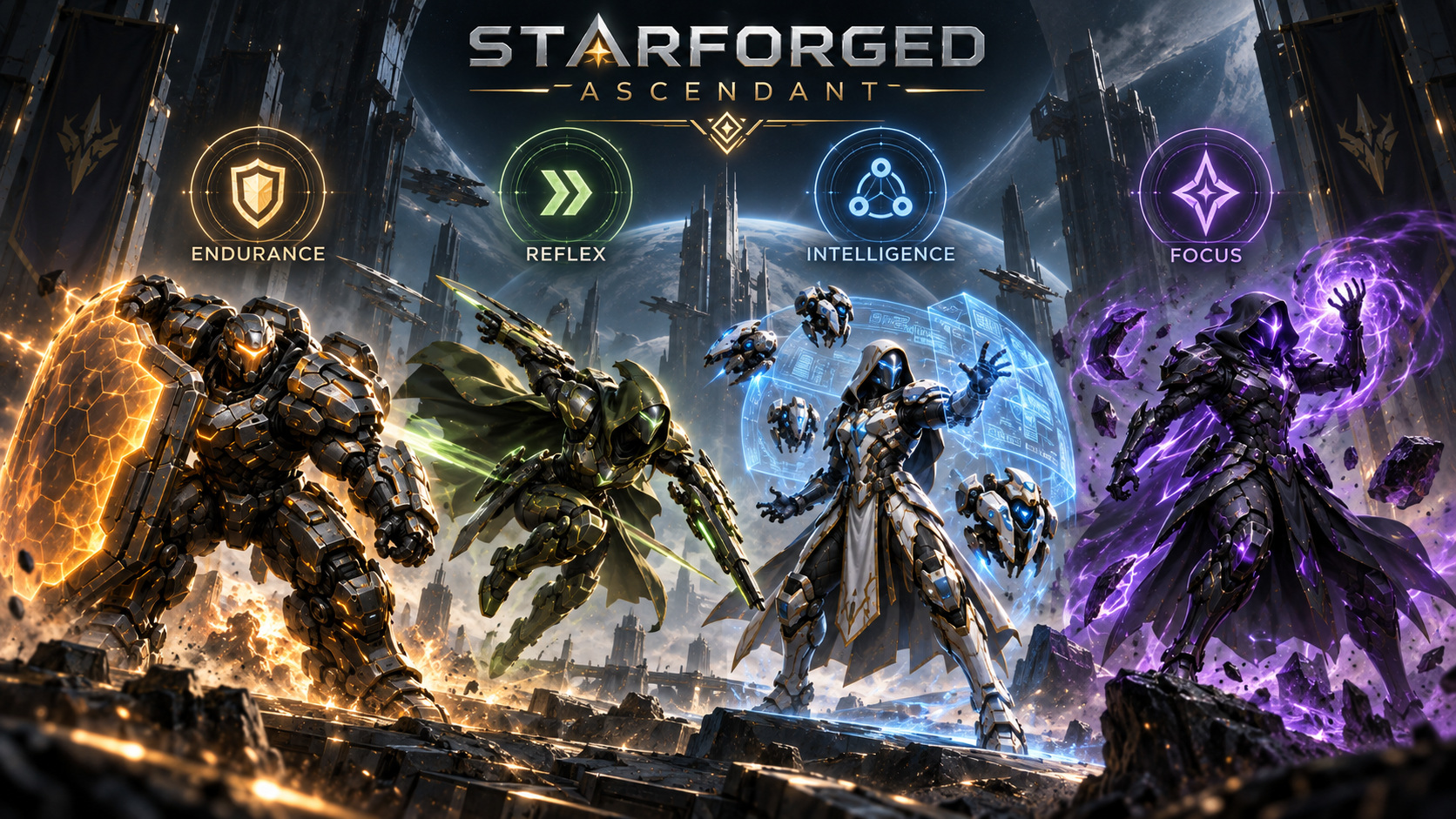
Seven Primary Stat Trees
The seven Character Stats each have their own tree:
Endurance, Strength, Reflex, Cunning, Intelligence, Stamina and Focus.
Each tree follows the identity of the Stat behind it.
Endurance develops survivability, Health and recovery.
Strength supports Armour and physical power.
Reflex helps with accuracy, evasion and fast combat responses.
Cunning supports vital strikes and tactical damage opportunities.
Intelligence develops Shields and utility.
Stamina supports movement and combat tempo.
Focus improves Power and resistance to hostile effects.
Five Weapon Trees
Your Weapon style also has dedicated progression:
Melee, Pistols, Rifles, Shotguns and Siege.
These trees develop the mechanics of the weapon type itself.
Melee rewards committing to close range.
Rifles can lean into precision and controlled ranged attacks.
Shotguns support close-range bursts and multi-target pressure.
Siege pushes toward heavy impacts and larger areas.
The aim is for the Weapon tree to affect how that weapon plays, so the choice feels visible during combat.
Three Armour Trees
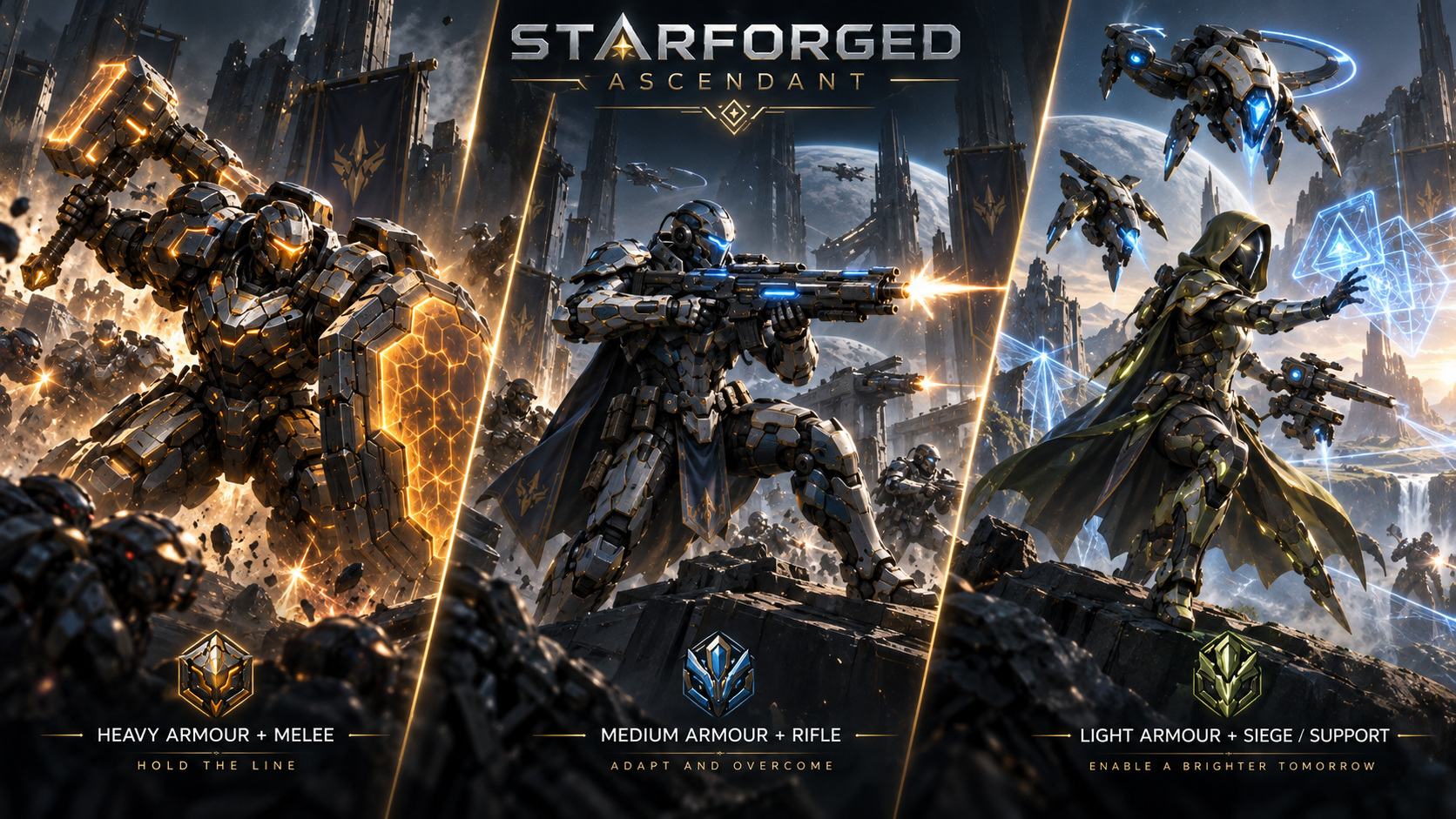
Heavy Armour, Medium Armour and Light Armour. These trees work differently from the other Talent Trees. Their talents are built around passive bonuses and timed effects that shape how the Character plays while that armour style is equipped.
Their effectiveness scales with commitment, each relevant talent becomes stronger based on the number of equipped Armour pieces matching that tree, so wearing more pieces of the same armour type pushes its identity further.
- Heavy Armour develops durable frontline play, improving the value of staying in the fight and absorbing pressure.
- Medium Armour supports movement, avoidance and a more mobile style of defence.
- Light Armour leans into Shields, utility and effects that reward a more technical approach to survival.
This creates a build-your-own-set approach to armour. You can commit heavily to one type to maximise its talents, or mix armour types and accept lower scaling in exchange for a broader combination of effects. The choice therefore covers both what each armour tree does and how strongly you want to invest in that style across the equipment you wear.
Five Power Trees
Each Power Core family has its own Talent Tree:
Fossil, Organic, Solar, Zero Point and Fission.
These trees are a major part of defining what the build actually does in combat.
They develop the identity of each Power family through a mix of damage, healing, buffs and debuffs, giving the player another way to shape offence, support and control around the Power Cores already socketed into their Artefacts.
- Fossil leans into Kinetic force, control and disruption, helping builds pressure enemies through physical impact and battlefield control.
- Organic develops Essence-based effects with a strong relationship to sustained damage, recovery and support.
- Solar pushes Energy-based offence and active pressure, with Talents that support aggressive damage and beneficial effects.
- Zero Point focuses on Psychic effects, enemy disruption and control, making it a strong fit for builds built around slowing, weakening and manipulating the fight.
- Fission develops Concussive power, heavy impact and area pressure, supporting builds that want to hit hard and create openings through force.
The important part is that these trees do much more than improve the damage type attached to a Power Core.
A Power tree can add new sources of damage, healing, buffs and debuffs to the build, letting the player push toward DPS, Tank, Healer, Buffer or Debuffer roles from the same underlying Power family.
That means two Characters using the same Power Core can still develop very differently depending on how deeply they invest in its Talent Tree and which branches they choose.
For many builds, the Power tree becomes one of the clearest expressions of the Character's overall archetype.
Drone
The final tree is dedicated to the Drone.
Drone Talents develop the companion that fights alongside the Character and help reinforce the way you have configured its Weapon, Chassis and Thrusters.
Talent Trees open progressively as points are invested, with larger choices appearing deeper in each tree.
Most combat trees eventually lead to an active capstone Skill.
You can spread points across several trees, so builds naturally combine different parts of the system.
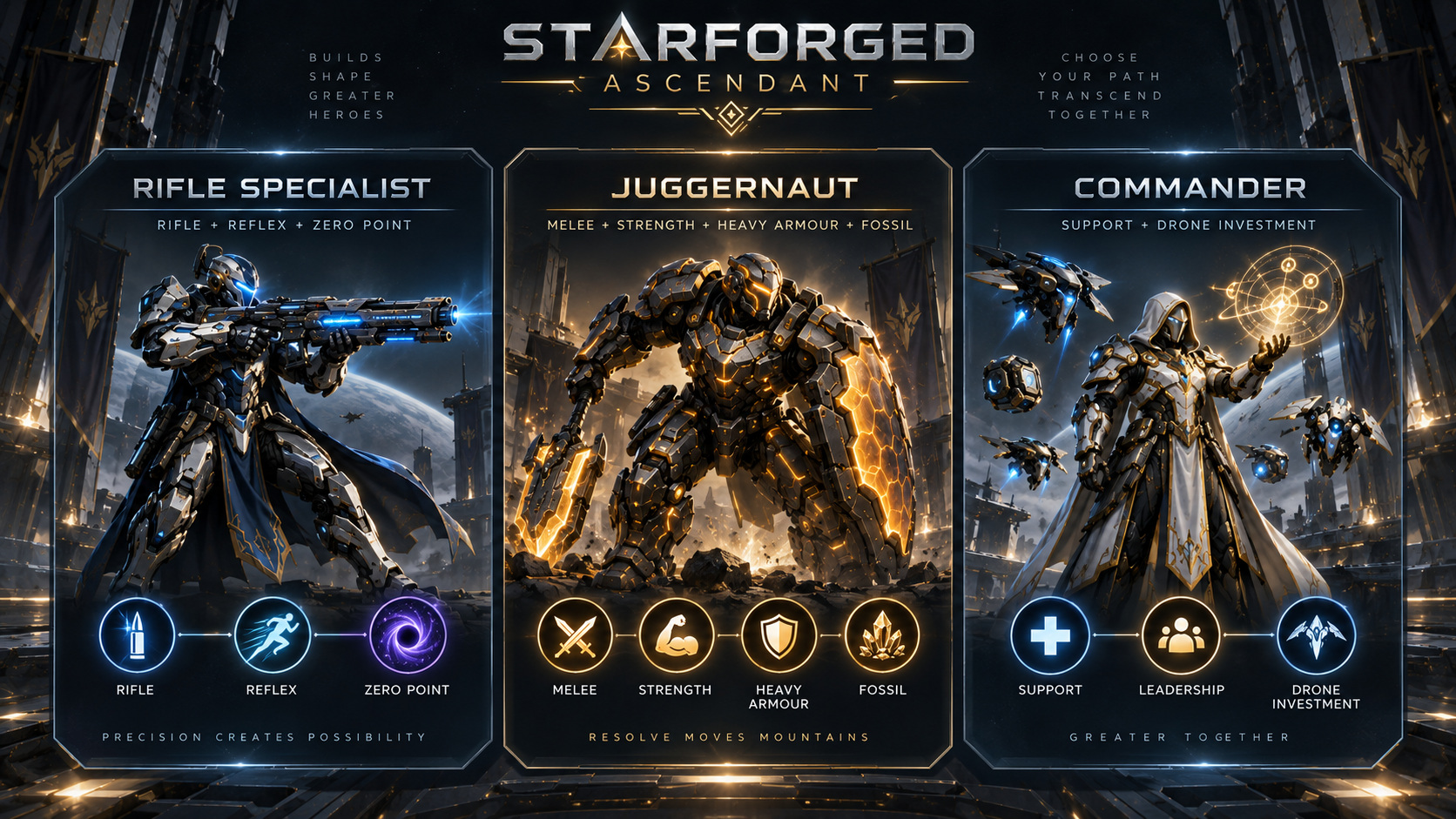
A Rifle Character might invest heavily into Rifles and Reflex, then add Intelligence for stronger Shield support and Zero Point for enemy disruption.
A close-range Character could combine Melee, Strength, Heavy Armour and Fossil.
The trees give every Character the same starting set of possibilities.
Where you put your points decides what that Character grows into.